Indian markets indeed offer some wonderful items at the best prices. Many markets of various eras still continue to exist. These places have been selling the best of clothes, accessories, handicrafts, jewelry, and many more.
There are hundreds of markets you can visit across India such as Johari Bazaar and Kannauj Market. Each market specializes in selling certain types of products. Some markets offer a mixed range of products including clothes, food, jewelry, and antiques. Here are some of the best markets worthy of a visit to India.
Highlights
- The Chor Bazaar is one of the largest and popular flea markets in the country.
- The Dadar Flower Market is one of Mumbai’s oldest and biggest flower markets.
- Kannauj Market is known to sell over 600 kinds of perfumes.
- Laad Bazaar is especially popular for selling bangles.
- The shops in Ima market are only run by married women..
20 Popular markets to visit in India
There are just so many local markets in India. They are scattered all across the country and offers a wide variety of products.Below is a list of must-visit-markets in India.
| Market | Location | Things to see or buy |
|---|---|---|
| Chandni Chowk | Delhi | Food, jewelry, electronics, spices, art and antiques, souvenirs, and knick-knacks |
| Connaught Place | Delhi | Books, clothes, handicrafts, electronic goods, eateries, cinema halls, and theaters |
| Janpath Market | Delhi | Clothes, Pashmina shawls, carpets, brass ornaments, folk paintings |
| Johari Bazaar | Jaipur | Jewelry, textiles |
| Bapu Bazaar | Jaipur | Rajasthani footwear called mojari, traditional Indian clothes like lehengas and salwar kameez |
| Kripal Kumbh | Jaipur | Decorative ceramic items such as plates, bowls, coasters, boxes, vases, |
| Gem Palace | Jaipur | All kinds of jewelry |
| Colaba Causeway | Mumbai | Crafts, electronic goods, cosmetics, and herbal products |
| Crawford Market | Mumbai | Daily fresh produce such as fruits, vegetables, flowers |
| Dadar Flower Market | Mumbai | Lotuses, roses, marigolds, gerbera, chrysanthemums, lilies |
| Chor Bazaar | Mumbai | Second-hand items, such as handicrafts, bronze statues of gods and goddesses, vintage gramophones, bronze bells, Bollywood posters, colonial-era lamps, antique Smiths clocks, vintage cameras, power tools, and authentic Victorian furniture |
| Flea Markets | Goa | Clothes, accessories, handicrafts, souvenirs, spices, books, and pottery |
| New Market | Kolkata | Clothing and accessories to electronics, food, spices, exotic flowers, utensils, brassware, leather bags |
| Karma Kettle | Kolkata | Tea bags and teaware |
| Laad Bazaar | Hyderabad | Pearl jewelry, semi-precious stones, silverware, saris, hand-woven materials, naturally scented perfumes, and wedding-related items |
| Jew Town | Kochi | Antiques, antique pieces of crockery, carved wooden furniture, bronze and brass sculptures, remnants of traditional houses, and jewelry |
| Floating Vegetable Market | Srinagar | Fresh produce, fruits, vegetables, high-quality saffron |
| Lakkar Bazaar | Shimla | Locally made wooden products like toys, jewelry, souvenirs, and utility items |
| Kannauj Market | Uttar Pradesh | Perfumes, tobacco and rose water |
| Ima market | Imphal | Groceries, local produce, and authentic food items, eg. dried fish, local herbs, clothes, handicrafts, bamboo products, woolens, traditional costumes |
1. Chandni Chowk, Delhi
The Chandni Chowk is one of the busiest and oldest markets in India that dates back to the 17th Century. It is the largest wholesale market where you can find endless shops and stalls of food, jewelry, electronics, spices, art, antiques, souvenirs, and many knick-knacks.
A famous spot is the Khari Baoli. It is the largest wholesale spice market in Asia which was built during 1650. This market beams with vibrant colors and aromas of local spices, herbs, and dried fruits.
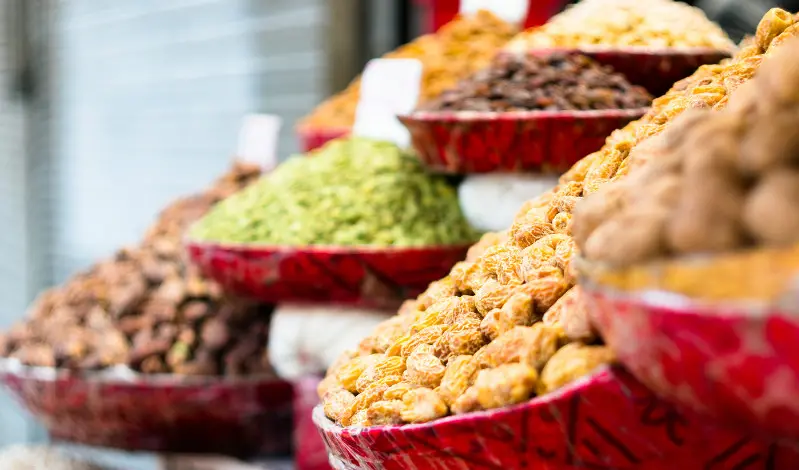 Indian dry fruits
- Address: Near Red Fort, New Delhi 110006, India
- Opening Hours: Every day except Sunday, 9.30 am to 8 pm.
2. Connaught Place, Delhi
Opened in 1931 and named after the Duke of Connaught, the Connaught Place is one of the largest commercial centers in Delhi. Today, it’s a heritage building and a shopping complex.
The alleyways and sidewalks of the market spill over with goods including books, clothes, handicrafts, electronic goods, and jewelry. The well-organized shops are interspersed with eateries, cinema halls, and theaters.
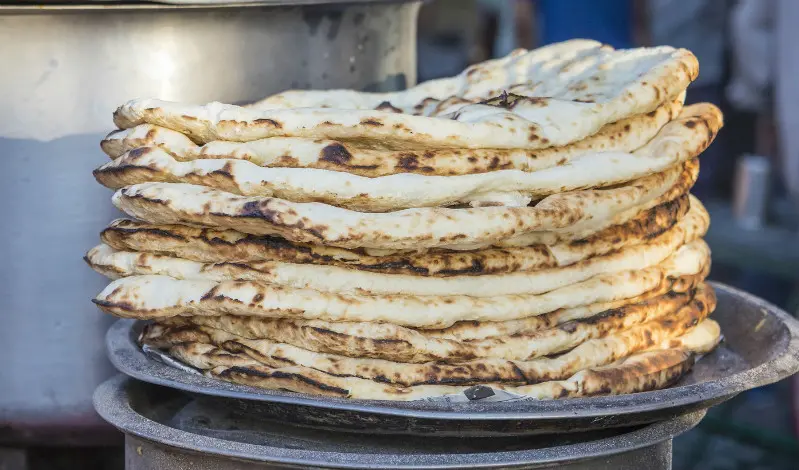 Eatery selling paratha
Though no longer Delhi’s premier shopping area, the Connaught Place’s shaded walkways are pleasant to stroll through and there are also bars and cafes that are great to stop at along the way. You can also visit the nearby Central Park, which features an amphitheater, fountains, and plush lawns.
The best way to reach this market is via the metro. The nearest station is Rajiv Chowk Station which is only a ten-minute walk from the market. You can also easily find buses and cabs to reach Connaught Place.
- Address: Connaught Place, New Delhi
- Opening Hours: Every day from 10 am to 8 pm
3. Janpath Market, Delhi
Janpath Market is one of the most famous shopping areas in Delhi and is known for its long lines of boutique stores selling a variety of merchandise from clothes, Pashmina shawls, and carpets to brass ornaments, folk paintings, and handicrafts.
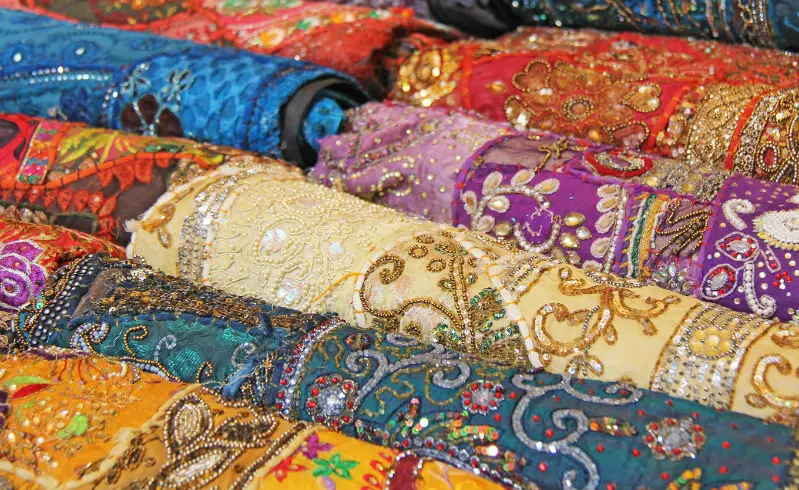 Indian textiles
There is also a Tibetan Market in Janpath selling Himalayan arts and crafts such as wall hangings and beads. This street market is a good place to go to find the latest fashion at good prices and to practice your bargaining skills.
Janpath Market is near some of the city’s popular attractions like Jantar Mantar, an observatory containing old world astrological instruments, and the National Museum, containing a collection of more than 200,000 art pieces.
- Address: Janpath, New Delhi, the nearest metro station is Rajiv Chowk Station
- Opening Hours: Monday to Saturday from 10 am to 9 pm and Sunday from 11 am to 8 pm
4. Johari Bazaar, Jaipur
Jaipur’s historic marketplace, the Johari Bazaar is a must-visit in any Jaipur travel guide. This market is catching the attention of visitors due to their specific stones and fabrics.
The name Johari Bazaar literally means "Jeweler’s Market". You can find all kinds of traditional jewelry, like Polki jewelry, Kundan jewelry, and Jaipur's style of jewelry made of enamel, Meenakari.
 The drum is played to accompany the melody
The Johari Bazaar not only sells jewelry, but there are also textile shops. From Bandhej and Leheria sarees, suits to block printed bed sheets and Jaipuri Rajais, you can find them all.
There are some food stalls and restaurants near the bazaars that make for useful pit-stops when you need to restore your energy before getting back to shopping. One of the most famous is Laxmi Misthan Bhandar’s delicious lassi.
- Address: Hawa Mahal Rd, Badi Choupad, Pink City, Jaipur, Rajasthan 302002, India
- Opening Hours: Every day, 10 am to 11 pm.
5. Bapu Bazaar, Jaipur
Bapu Bazaar is the best market for traditional Rajasthani products including vivid textiles, handicrafts, brass work, jewelry, and precious stones.
The most famous items found here are a type of Rajasthani footwear called mojari and are traditional shoes made from camel skin. Other popular items include traditional Indian clothes like lehengas (heavy embroidered skirts) and salwar kameez (long Indian shirt and pants).
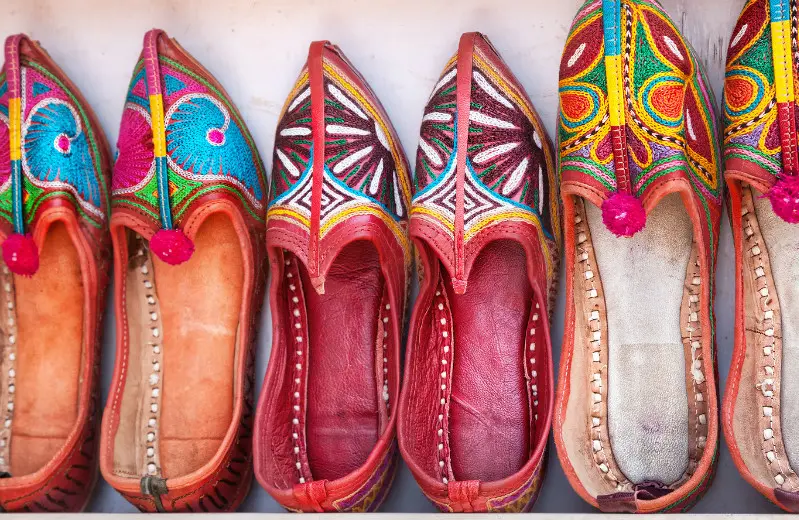 Rajasthani footwear
This market is popular among travelers and is the perfect place to get an authentic shopping experience, see a diverse range of local goods, and buy Rajasthani souvenirs at affordable prices.
- Address: Between Sanganer Gate and New Gate, Jaipur
- Opening Hours: Every day from 10:30 am to 7:30 pm
6. Kripal Kumbh, Jaipur
Kripal Kumbh is a showroom, displaying a wide array of authentic blue pottery. This workshop was started in the late sixties by Sri Kripal Singh, an artist and well-known ceramics master. Today the shop is maintained by a team of artists who were all trained by him.
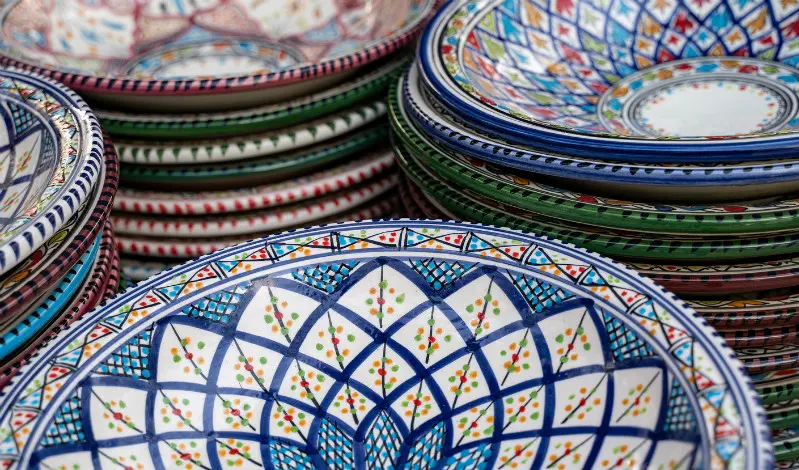 Decorated Ceramic Bowls And Plates
This is the best place in Jaipur to appreciate the art of blue glaze pottery both the classical designs and the new shapes that have been created over time. At the shop, you will find a range of decorative ceramic items such as plates, bowls, coasters, boxes, vases, and other trinkets. Pottery making classes are also available.
- Address: B-18A, Shiv Marg, Banipark, Jaipur
- Opening Hours: Every day except Sunday from 9:30 am to 6 pm
7. Gem Palace, Jaipur
As the oldest and the most reputable jeweler in Jaipur, the Gem Palace has a history of crafting splendid jewelry for maharajas and their queens, presidents, and even film stars. Through their wealth of experience, the Gem Palace has developed sophisticated designs that cater to every taste.
At the store, visitors can see magnificent pieces on display including the splendid royal collection which once belonged to the local royal families, the Raj collection which glimmers in timeless Rajasthani tradition, and the universal collection celebrating simple beauty.
You can find all kinds of jewelry here from vintage pieces to intricate modern designs. Be prepared to spend quite a bit of money if you buy anything.
- Address: Shop No. 348, MI Road, Jayanti Market, New Colony, Jaipur
- Opening Hours: Every day except Sunday from 10:30 am to 7 pm
8. Colaba Causeway, Mumbai
Known as the “Culture Square” of Mumbai, Colaba Causeway gets its charm from the surrounding colonial buildings that line the area such as the Prince of Wales Museum and National Gallery of Modern Art.
The causeway is filled with retail shops selling decorative crafts, electronic goods, cosmetics, and herbal products as well as shawls, carpets, and ethnic jewelry. Visitors can try some street food or relax at roadside cafes and restaurants here.
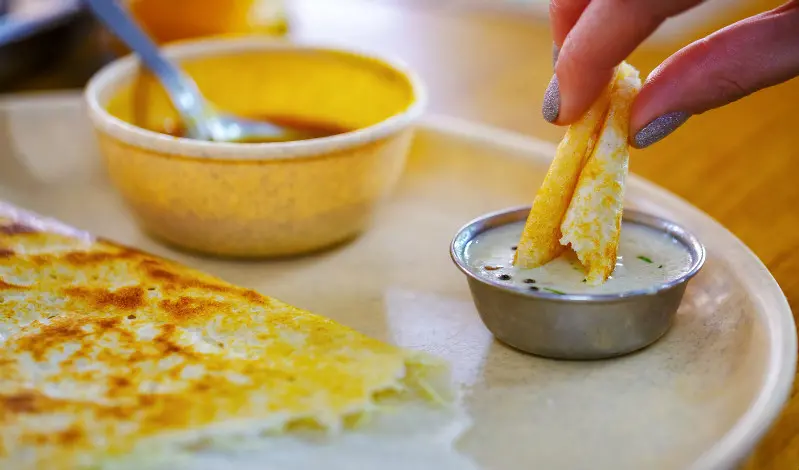 Try some street food
- Address: Colaba Causeway, South Mumbai
- Opening Hours: Every day from morning until night
9. Crawford Market, Mumbai
Crawford Market is one of the most vibrant markets in Mumbai specializing in daily fresh produce such as fruits, vegetables, flowers, fish, and poultry. It’s also a wholesale market selling an array of items including imported goods like cosmetics, gift items, and toys.
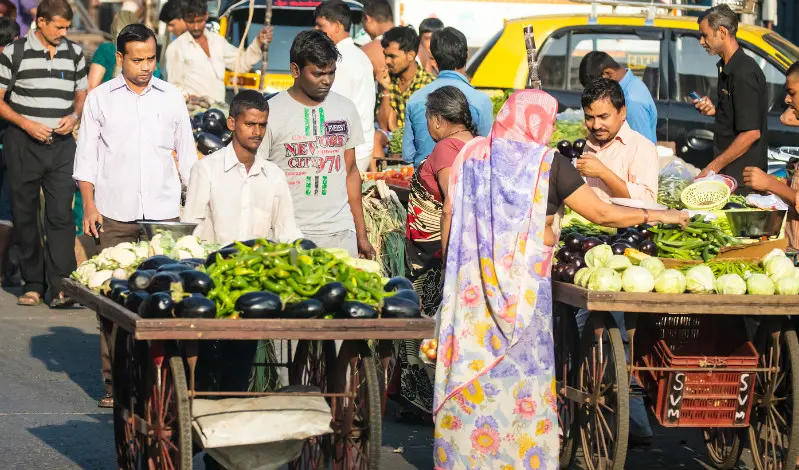 Fresh produce market
The market lies to the north of Chhatrapati Shivaji Terminus. West of the market is the Zaveri Bazaar which specializes in diamond and jewelry trade while Chor Bazaar is located to the northwest.
- Address:North of CST, South Mumbai
- Opening Hours: Every day except Tuesday from 11 am to 8 pm
10. Dadar Flower Market, Mumbai
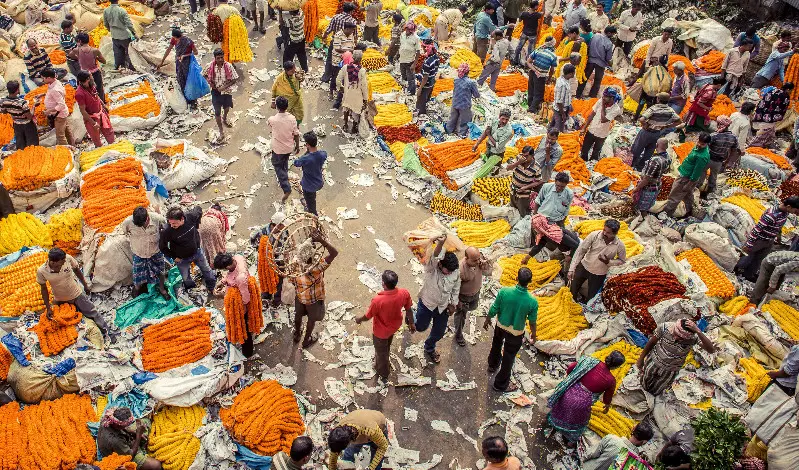
The Dadar Flower Market is one of the city’s oldest and biggest flower markets. It is also known as a Phool Gully or Flower Road.
The market sells wholesale, although one can still find small vendors coming to make their daily purchases. It is filled with row after row of stalls and wooden planks set up to sell flowers, both common and rare. You can find lotuses, roses, marigolds, gerbera, chrysanthemums, lilies, and many more.
Comments
Post a Comment
Thank You for Valuable Feedback